Featured
Table of Contents
The court will periodically review your earnings and expenses and change if needed. At the end of your strategy, staying unsecured debts are discharged (forgiven). Personal bankruptcies remain on your credit report for seven years (Chapter 13) to ten years (Chapter 7). Temporarily stops collections Momentarily stops foreclosure actionsCould reduce your debtCreditors should adhere to whatever the court decides.

Public recordInitial credit rating damageMost people pay court and lawyer feesSome financial obligations aren't eligible (like trainee loans or past-due child support) With a charge card balance transfer, you move the exceptional balance from one credit card to another, usually with a lower rates of interest. Let's say you have $10,000 on a card with a high interest rate, and you get approved for a card with an advertising 0% APR for 18 months.
Here's how the 2 cards compare: Month-to-month paymentAPRTime to pay offTotal interest paidCredit card $10,000$37525%40 months$4,748 Balance transfer $10,300$5720%18 months0Potential to save on interestDebt debt consolidation might streamline paymentsCould speed up payment considering that there's no interest for a set timeGood to exceptional credit required to qualifyFee to transfer balance to brand-new cardPotential to end up in worse monetary shape if you continue spending on the brand-new card While credit card federal government financial obligation relief programs aren't a reality for the majority of people, there are other ways to get help.
If you're thinking about charge card debt relief programs, research study provider thoroughly. Check the costs and online evaluations to discover what other individuals are stating before you commit. Be careful of any debt relief business that doesn't tell you about the pros and cons of debt settlement services or needs an in advance cost.
Collect files. Collect any statements associated with your present financial circumstance. This consists of credit card costs, exceptional loans, and other monthly expenses. Overall debt. Accumulate all financial obligations to get a clear picture of just how much is owed. Review income. Combine all sources of month-to-month earnings to better understand how much you're dealing with and how much you have offered to put towards credit card bills.
Improving Your Credit Future After Insolvency
If you decide to go the DIY path, here are some of your choices: Debt snowball technique. Pay off the tiniest financial obligation first while continuing to make minimum payments on larger debts. As soon as you've paid off one debt, roll the cash you were paying toward that debt over to the next one on your list.
Debt avalanche approach. Pay off financial obligation with the greatest rate of interest initially to lessen the total interest paid. Once the debt with the greatest rates of interest has been settled, roll the cash you were paying to the financial obligation with the next greatest rate of interest. Continue until all your credit card debt is settled.
Contact creditors straight to talk about reducing rates of interest, waiving costs, or establishing a new payment plan that much better fits your budget. Schedule a totally free appointment with a professional debt expert to discuss your debt, objectives, and choices offered. Your expert can assist you create a financial obligation relief strategy that deals with your budget plan.
Here's a birds' eye view of a few of the choices: OptionHow it worksDebt settlementNegotiate with creditors to pay less than the total owed. Debt management planOnce creditors have accepted concessions, you make a single monthly payment. Financial institution challenge programYou might be approved for lowered payments, a lower rate of interest, or postponed payments.
Interest rate cap on some credit card debt, and credit rating protection. BankruptcyDepending on which type of bankruptcy you file, your credit card debt might be entirely (or partially) eliminated.
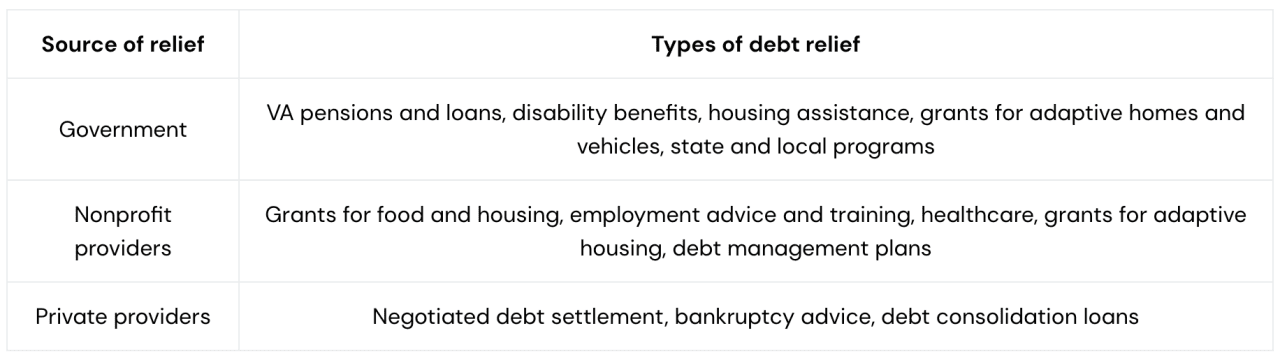
Eligibility for Federal Financial Assistance in 2026
The company was placed into receivership by federal court order in 2024 following an FTC enforcement action.
I want to be in advance about what this page is and isn't. Whatever you want to share ought to be published in the comments by you, with your name attached. I'm not ready to be anybody's avenue for info they will not stand behind themselves.
Exploring Government-Backed Relief SolutionsAn educated consumer is our finest consumer. Sy SymsUSA Student Debt Relief is a for-profit trainee loan relief business. Rather than repeat what they state about themselves here, I 'd encourage you to review the public court and regulatory records straight those filings offer you a primary-source picture of the company's history.
Trainee loan relief companies need to be licensed in each state they run in.
Proven Methods to Settle Unpaid Accounts
Any business gathering charges before providing assured results may be in violation of FTC rules. A high BBB grade doesn't always mean a business is right for you it suggests they respond to grievances filed through the BBB.
You can look for U.S.A. Student Financial obligation Relief straight: Get the Daily 10 AM Debt Briefing Weekday news complimentary, no spam, unsubscribe anytime. When you read complaints, look for: What the problems are about charges, program efficiency, communication problems? How the business reacted did they fix concerns or simply close them? Whether the same issue appears consistently a pattern matters more than a single complaintThe ratio of grievances to clients a large business will have more problems in raw numbers You can discover customer reviews of U.S.A. Student Financial Obligation Relief on their Trustpilot profile here.

Latest Posts
What to Understand Before Applying for Bankruptcy
Finding Community-Based Financial Help Partners in 2026
Tips to Fix Your Credit in 2026